
Turning the sod
Training for smart community-led initiatives
County Kildare LEADER Partnership is looking for people in seven areas of Kildare who have ideas for their locality and want to find out how to put them into action.


Take Smart community-led initiatives
The Turning the Sod community-led training programs across County Kildare are designed to develop SMART Village strategies. Watch to see how the training will support turning ideas into action and foster sustainable, connected, and vibrant rural communities throughout the region.
TRAINING IN
SEVEN AREAS
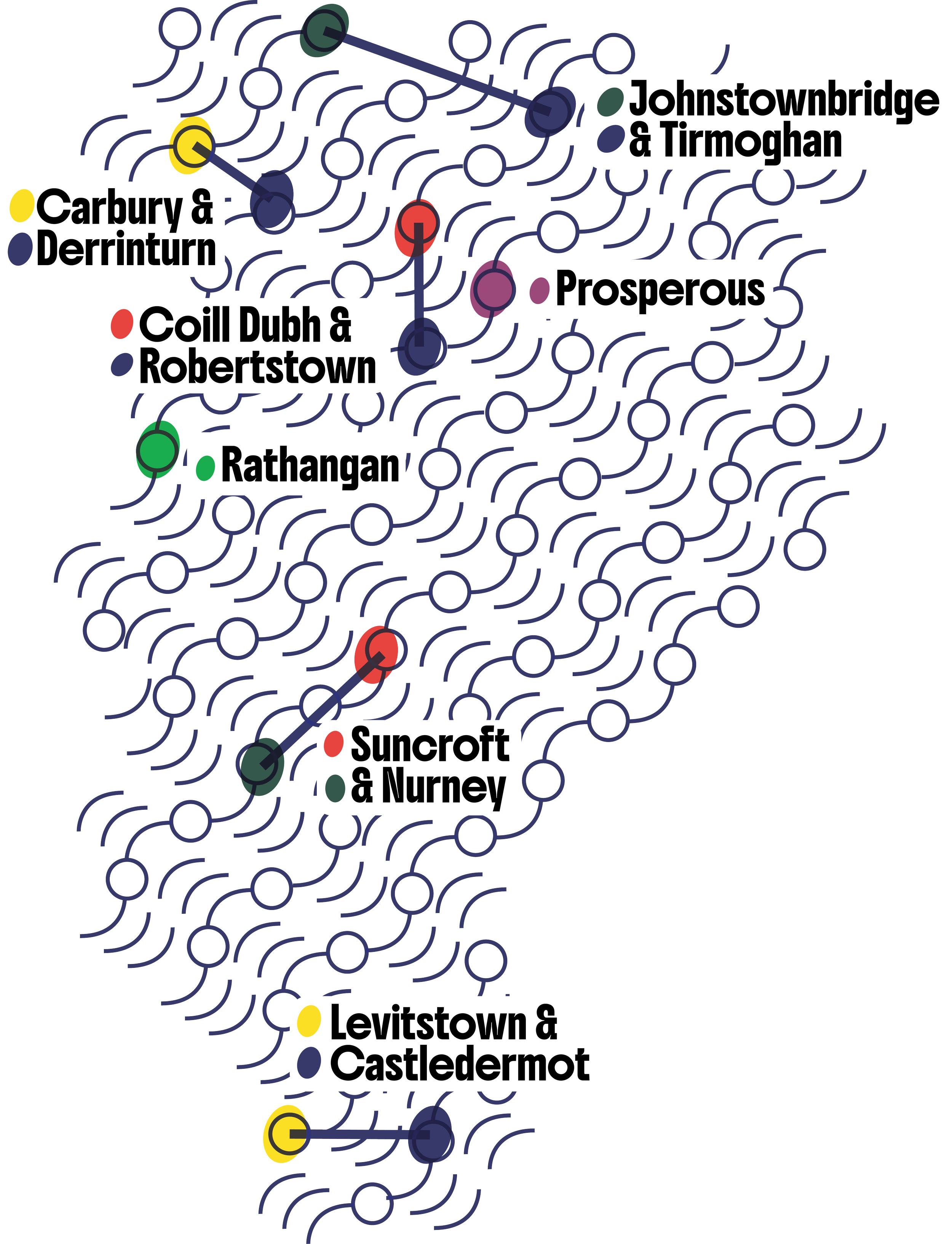
Johnstownbridge & Tirmoghan, Carbury & Derrinturn and Rathangan will be the first 3 areas to go through the process, with other areas across the county starting in 2026.
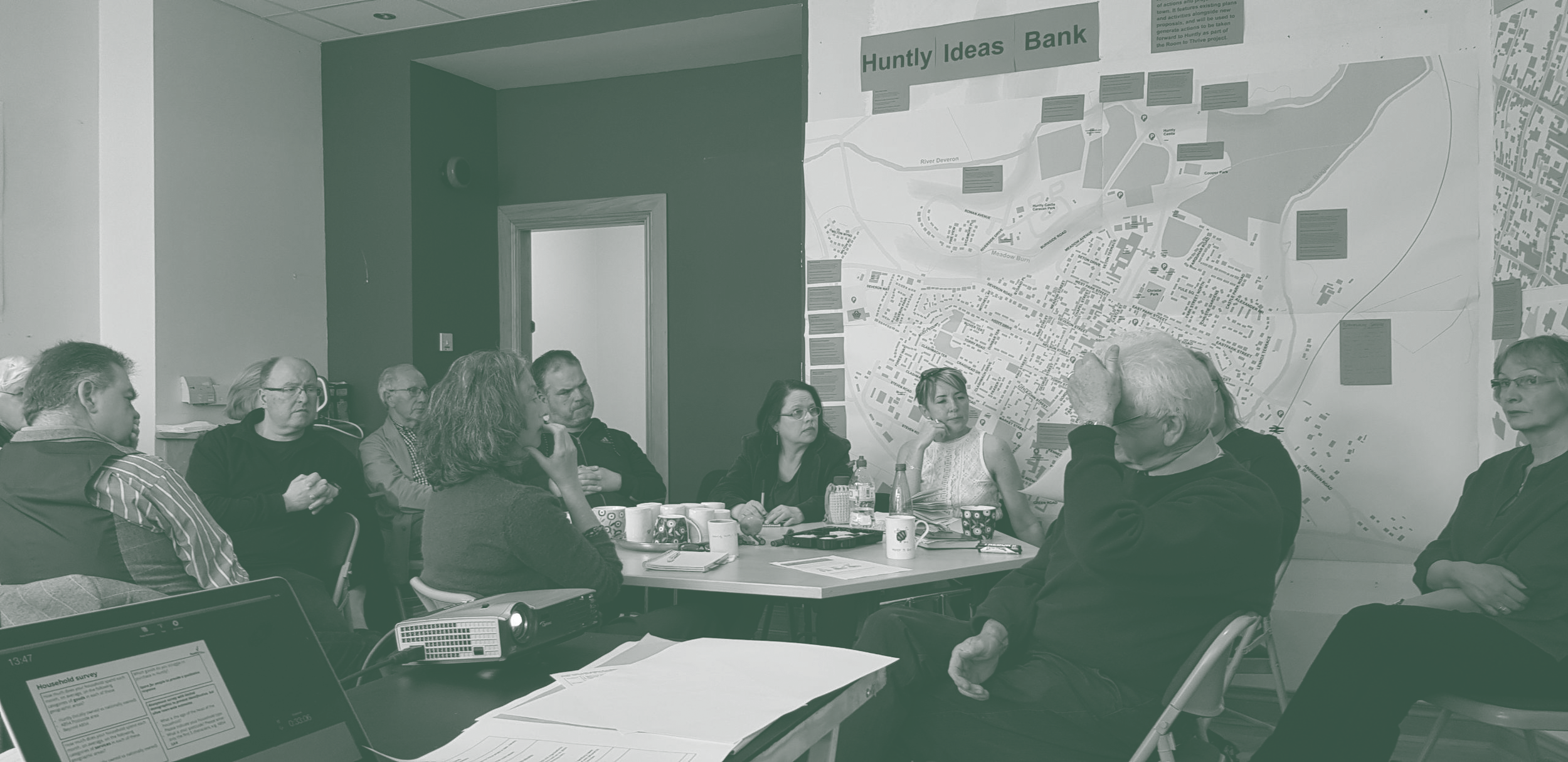
We’re inviting residents to take part in a dedicated local training initiative that will bring members of the community together over ten 2-hour sessions, starting this November.
The sessions will be led by community development experts from the award-winning company icecream architecture, who will guide the group and provide hands-on training to move ideas forward.
Sessions will run fortnightly from November until March. All sessions will be held in person to maximise the opportunity to build connections locally.
The programme has three objectives: to inform communities about bottom-up responses to rural challenges, to harness local ideas in a dedicated SMART Village Strategy, and to get community projects ready to the point of turning the sod.
"Turning the sod" refers to a ceremonial groundbreaking event that formally marks the beginning of development for a new community project, such as a building or public work. It involves dignitaries or project leaders using a ceremonial shovel to cut into the soil or grass, symbolising a fresh start and the transition from the planning stage to physical construction.

What is a SMART villAGE Strategy?
SMART Village Strategies offer benefits to rural communities by leveraging collaboration, technology and innovation to address local challenges. They enhance access to essential services, such as education and transportation, through better partnerships, digital solutions, and infrastructure improvements. By fostering connectivity, Smart Villages create opportunities for economic growth, enabling local businesses to access wider markets and adopt sustainable practices. They also promote environmental stewardship through renewable energy use, climate adaptation strategies, and biodiversity preservation.
Most importantly, Smart Villages empower residents to actively participate in community development, fostering social cohesion, cultural enrichment, and a higher quality of life for all. Key traits include:
Community Participation and Decision Making
Smart Technology Use
Strategic Planning
Sustainability
Better quality of Life
Access to better services and opportunities.
Economic Growth.
Connectivity.
Continuous Improvement.
These traits transform challenges into opportunities, ensuring inclusivity, resilience, and long-term growth.


Our aim is to inspire discussion that establishes a fresh public perspective on the future of each community through an interesting, empowering and accessible programme of engagement and training.
The training will:
Work collaboratively with participants to draft and finalise tailor-made SMART Village Strategies, aligning local aspirations with the principles of the Smart Village concept.
Ensure strategies are practical, inclusive, and reflective of community input.
Engage the wider community throughout the process.
The training process
The training programme will integrate participatory, hands-on methods, emphasising transformative learning and co-design principles.
We will adopt a Design Thinking process for engagement and training to develop a connected and inclusive outcome that ensures input to the Capacity Building Training and the SMART Strategies Development with diverse local communities as its focus. This approach encourages a staged process for exploring views and then refining consensus over the 4 Stages, visualised below.
10 sessions overview
-
This session would focus on the group to get to know each other even better than they may already and to work out how they will best work together. The main objective will be to build trust among the group and to appreciate each other as a working team, working to a consensus built objective.
Delve into local projects from the past/present/future. Share learnings and gaps that arose in capacity.
Develop Objectives and Capacity Building Needs
Introduce SMART Objectives and Benefits
-
Introduce principles of CLLD, SMART Village success stories.
Facilitate "Blue Sky Thinking" activities to help communities envision their future.
Share case studies of strong and effective communities.
-
Train participants in identifying and leveraging physical, social, economic, and educational assets.
Guide participants in conducting community surveys, with a two-week gap to gather data.
Reinforce inclusivity by encouraging participants to involve additional community members in appropriate elements like community surveying.
-
Explore case studies of digital and social innovation projects in Ireland and Europe.
Train participants to identify opportunities for leveraging technology in their communities.
Begin drafting individual SMART Community Strategies and Community Vision.
-
Help participants identify three priorities for their communities.
Develop no-cost, low-cost, medium-cost, and high-cost actions to address these priorities.
Guide participants through completing a LEADER Programme Expression of Interest form.
-
Discuss the local impacts of climate change and the importance of mitigation and adaptation.
Explore available supports for climate-proofing community projects.
-
Organise a visit to a community that has successfully implemented a Smart Village initiative.
Facilitate peer learning through discussions with community leaders and stakeholders.
Introduce other communities from across the project to share learning and potential joined-up thinking.
-
Provide training on engaging with local politicians, understanding planning processes, and securing resources.
Develop participants’ storytelling and communication skills for effective advocacy.
Consider approaches for leveraging support for the area.
-
Cover essential topics such as grant applications, fundraising, cash flow management, and record-keeping.
Building volunteering Capacity within the wider community.
-
Prepare participants to present their SMART project ideas.
Draft Strategies to local councillors, members of the Kildare LAG, and funding bodies.
Celebrate achievements by awarding certificates of completion.

Who are We?
-
In 2009, we set out in an icecream van to make architecture, planning and regeneration more accessible for the public. We sought to bring open discussion and co-design opportunities to the people that mattered most to a place. Our team includes community-led facilitators, architects, engagement specialists, designers, software developers and strategic thinkers.
Over the last few years, we led the Innovating Communities project, to support rural communities along the border counties of Louth, Monaghan, Cavan, Leitrim, Sligo and Donegal. We trained over 1500 people in Design Thinking while developing over 130 unique solutions to rural challenges in partnership with them and local partners. These included Town Centre plans with a SMART focus, arts heritage and environment projects, inclusion strategies, and active working groups, to name but a few.
Whether we are creating strategies, action plans, engagement programmes, digital tools, heritage interpretation or public art, we consistently apply our principle of ‘design by community’. This expresses our belief that by placing local people at the heart of the design processes, public bodies can achieve higher quality outcomes, more resilient results and positive spillover effects through skills-sharing and fostering social capital.
-
County Kildare LEADER Partnership (CKLP) is one of over fifty not-for-profit Local Development Companies in Ireland. We are responsible for delivering a range of government and EU-funded programmes in Kildare.
CKLP has a Board of Directors and a team of staff that are focused on supporting communities and individuals to improve their quality of life and play a full and active role in their local community.
In delivering this work, CKLP strives to adopt a people-centred approach that is caring, inclusive and empowering. We recognise that in order to be effective, any work that is undertaken with stakeholders in the county should be achieved through co-operation and collaboration.

-
The LEADER Programme (Liaisons Entre Actions de Développement de l’Économie Rurale) was established by the European Commission in 1991 and was designed to support the development of sustainable rural communities.
The LEADER Programme has a long history of supporting communities and business in County Kildare. The projects that have been supported over the years range in size from small-scale projects to large flagship initiatives in a diverse range of sectors. These include farm diversification, heritage, community facilities and amenities, renewable energy and environmental projects.
This training programme is fully-funded through the 2023 – 2027 LEADER Programme.